
Two very different projects, two very different briefs. Here is how hardwood and composite decking each performs in practice, drawn from real PJR builds in West Footscray and Williamstown.
A deck can completely change how a home lives outdoors, but hardwood and composite get you there in very different ways. Both materials can transform an outdoor space, but they behave differently over time, cost different amounts to install and maintain, and suit different styles of home. Below, we break down the key differences, walk through the timber species we use most often, and show two recent PJR decking projects: a timber entryway deck in West Footscray and a composite poolside deck in Williamstown.
If you are weighing up materials for a new deck, this should give you a clearer picture of which option suits your home, your lifestyle and your budget.
Hardwood Decking: Natural Warmth and Character
Hardwood decking remains a favourite for homeowners who want a warm, natural finish that develops character over time. At PJR Landscaping & Design, our timber decking work typically includes:
Merbau decking
A premium hardwood valued for its rich, deep natural colour, strength and resistance to splitting.
Spotted Gum decking
A durable, refined Australian hardwood with a distinctive grain that takes oil beautifully and ages with real character.
Treated pine framing and substructure
The structural backbone that keeps a deck solid and level for decades, regardless of the board material above.
Deck steps and level transitions
Built to tie a raised deck neatly back into the surrounding garden or paving, handling any level change cleanly.
Hardwood decks require periodic oiling to maintain their colour and protect the timber from Melbourne's sun and rain. Many homeowners see this as part of the appeal: a deck that ages naturally and can be refreshed rather than replaced. The grain, the warmth and the slight variation between boards are things you simply cannot replicate in any manufactured product.
Composite Decking: Low Maintenance, Consistent Performance
Composite decking has grown in popularity for good reason. Made from a blend of recycled timber fibres and polymers, it offers the look of timber without the ongoing upkeep. For the right application, it is genuinely hard to argue against:
No oiling, sanding or staining required
Once it is down, it stays that way. An occasional clean with soapy water is all it needs to look sharp year after year.
Resistant to fading, splintering and moisture damage
Composite holds its colour and surface under Melbourne's UV and rainfall in a way that untreated timber cannot.
Strong around pools, spas and exposed areas
Where timber decking faces constant splash-back and evaporation cycles, composite decking handles the conditions without cupping or cracking.
Available in a range of tones and grain profiles
Modern composite boards mimic natural timber closely enough that, at a glance, many people cannot tell the difference.
It is a strong choice for busy households, rental properties, or exposed areas where a deck needs to perform with minimal intervention year after year.
Hardwood vs Composite: The Key Differences
Project 1: A Timber Entryway Deck in West Footscray
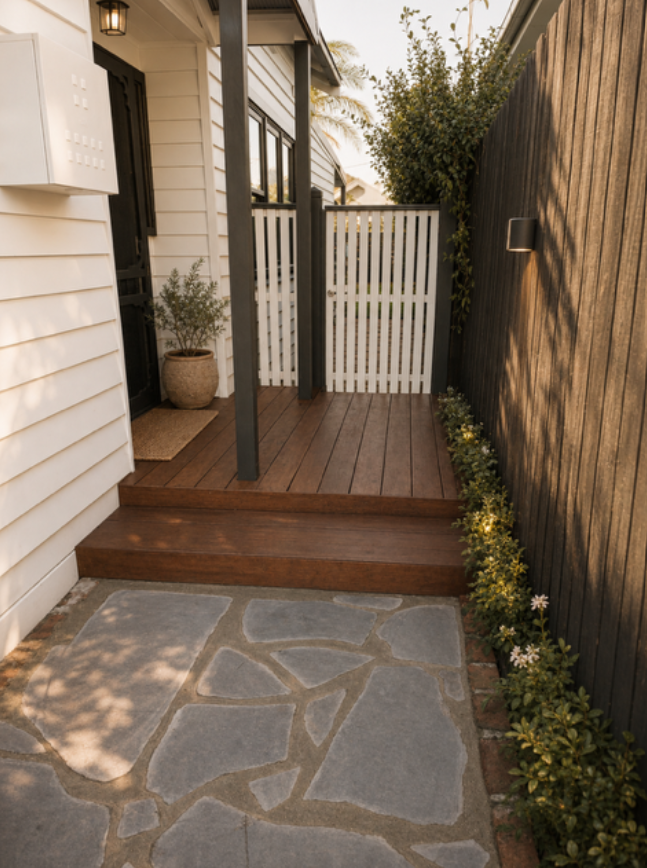
Hardwood deck and step with crazy paving path, West Footscray
This West Footscray project called for a small but high-impact solution: a timber deck and step bridging the front door of a weatherboard home with a crazy paving path below. The brief was to create a warm, welcoming entry point that felt connected to both the home's character and the surrounding garden, without overcrowding a narrow side passage.
We used a rich hardwood deck board with a single generous step handling the level change between the door threshold and the crazy paving path below. Integrated garden lighting along the fence line and surrounding planting tie the deck into the rest of the front garden. The result shows how a compact deck build can work alongside existing hard landscaping rather than needing to replace it.
This kind of entryway deck is one of the most rewarding builds we do. The footprint is small, the investment is manageable, and the change it makes to how the front of a home feels is significant. Footscray's heritage weatherboard homes in particular suit this warm, natural timber aesthetic far better than any composite alternative would.
Project 2: A Composite Poolside Deck in Williamstown
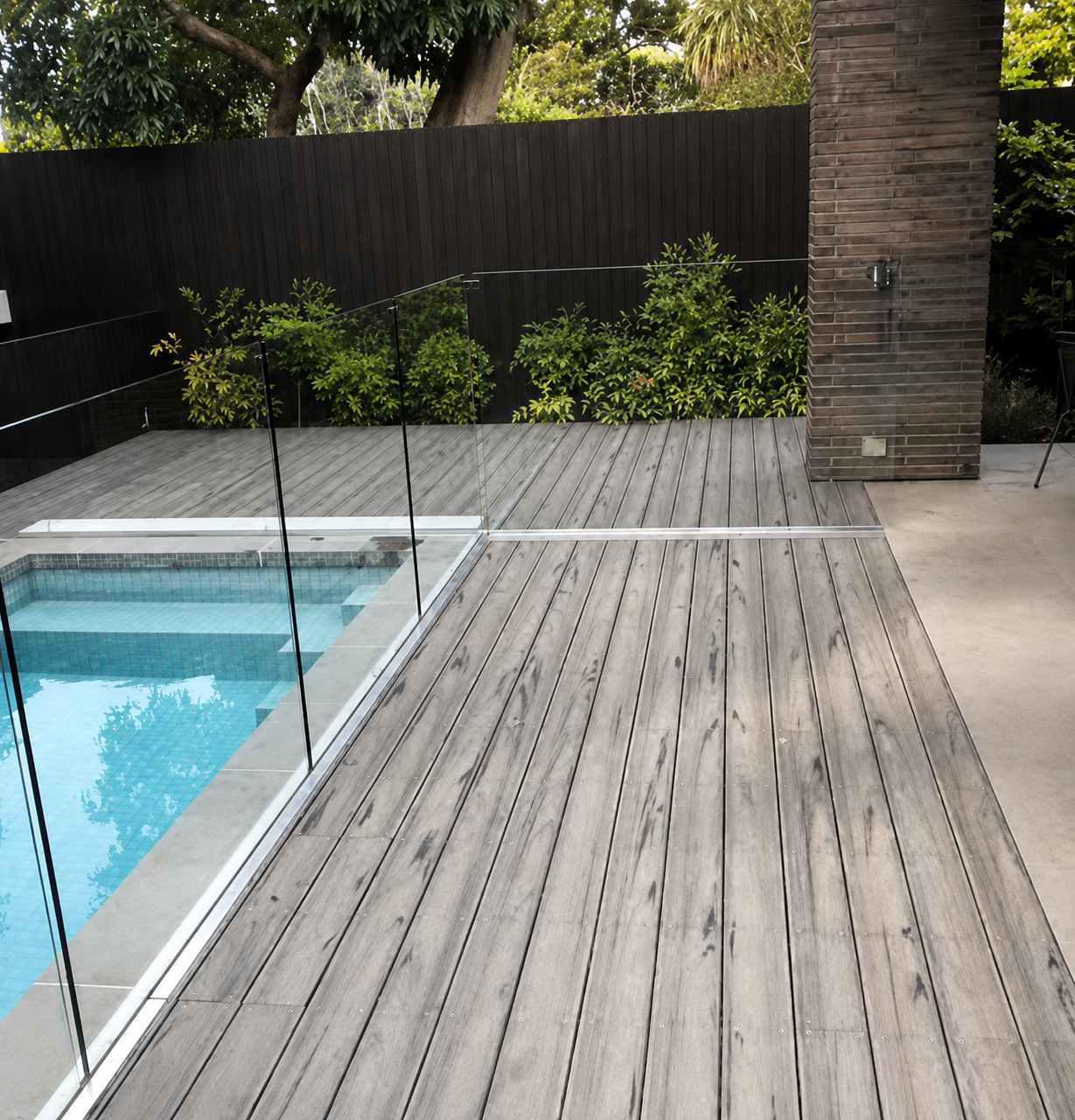
Composite decking with frameless glass balustrade around a pool and spa, Williamstown
For a Williamstown home with a pool and spa, composite decking was the clear choice. Poolside areas face constant moisture, sun exposure and foot traffic: exactly the conditions where composite decking earns its reputation for low-maintenance performance.
We installed a driftwood-grey composite board around the pool, integrated with a frameless glass balustrade for safety and unobstructed sightlines. The deck level was coordinated with the adjoining paved patio and the brick pillar detailing on the boundary wall. The grey tone ties together the concrete pavers, the dark fencing and the lush green planting behind the glass, giving the space a cohesive, finished quality that works as well from inside the house as it does from poolside.
The result is a poolside space that will hold its colour and finish for years without the sanding or oiling a timber deck in the same position would require. For a Williamstown home that sees the full range of bayside weather, that matters a great deal.
Which Deck Is Right for You?
If you love the natural warmth of timber and do not mind a bit of ongoing care, hardwood decking, particularly Merbau or Spotted Gum, is hard to beat for entryways, alfresco areas and garden decks on character homes. The grain, the warmth and the way it ages give you something that manufactured materials cannot quite match.
If your deck will face heavy sun, pool splash-back, or you simply want a set-and-forget outdoor surface, composite decking is the more practical long-term option. Many of our clients end up using both across a single property: hardwood for a feature entry or alfresco area, and composite for a poolside or low-maintenance zone. Whatever the mix, getting the footing, framing and level transitions right is what makes a deck last and that is something we handle as standard on every build.
Hardwood
Merbau & Spotted Gum for warmth and character
Composite
Low-maintenance boards for pools and exposed areas
Both
Many projects use each material for the right zone
Decking Across Melbourne's Inner West and Bayside
PJR Landscaping & Design builds decks across Melbourne's inner west and bayside suburbs, including Footscray, Williamstown, Newport, Yarraville and the surrounding areas. Whether the project is a simple entryway step-up or a full poolside decking and balustrade build, we handle the full scope in-house: from footing design and framing to the finished board and any associated paving or garden works.
Council compliance requirements, structural footing depth and integration with existing hard landscaping are all handled as part of the build. We do not subcontract the work, which means one team, one point of contact and consistent quality from start to finish.
Areas We Service
Newport · Williamstown · Yarraville · Footscray · Kingsville · Altona · Spotswood · Seddon + more
Frequently Asked Questions
Is hardwood or composite decking better for Melbourne weather?
Both perform well in Melbourne's climate when installed correctly. Hardwood species like Merbau and Spotted Gum are naturally durable and weather beautifully, while composite decking resists moisture, fading and splintering with very little upkeep, which suits exposed or poolside areas particularly well.
What hardwood decking timbers does PJR Landscaping use?
PJR Landscaping & Design primarily works with Merbau for its rich natural colour and Spotted Gum for its durability and refined finish, along with treated pine for framing and substructure.
Is composite decking low maintenance?
Yes. Composite decking does not need oiling, sanding or staining, and it resists splitting and fading, making it a strong low-maintenance option compared to hardwood. It performs especially well around pools, spas and other high-exposure areas.
How long does a deck installation take?
Most residential deck builds take between two and five days, depending on the size, complexity and site conditions. Projects that include paving, steps or structural works alongside the deck will take longer.
Related Services
Get in touch
Planning a Deck in Melbourne's Inner West or Bayside?
Whether you are leaning towards hardwood or composite, or are not sure yet, PJR can help you choose the right material and deliver a deck built to last. Get in touch to discuss your project.
Get in touchFurther reading
By Zahn ·